Melly’s Musings
Dupe Culture: Did the Fragrance Industry Create Its Own Monster?
Luxury priced perfume out of reach. What exactly did it think would happen?
By Melanie Jane
Apparently, the perfume industry has discovered morality.
Not when it was reformulating classics, launching flankers with the daring of reheated soup, or asking for something “completely original” that smelled suspiciously like the current bestseller.
No. The moral crisis arrived when ordinary people started buying dupes.
What are people actually buying?
A counterfeit tries to pass for the genuine bottle. What I mean by a dupe here is a perfume sold under its own name that sets out to smell like a particular fragrance. Then there’s affordable perfume with an identity all its own. Those are three different purchases, even if a TikTok video can make them sound like the same thing.
Let’s be clear: copying somebody else’s formula, packaging and identity raises ethical questions. Perfumers deserve recognition. Development costs money.
But the woman buying a £20 alternative because the original costs £300 is not the criminal mastermind here.
Perfume used to be the way in
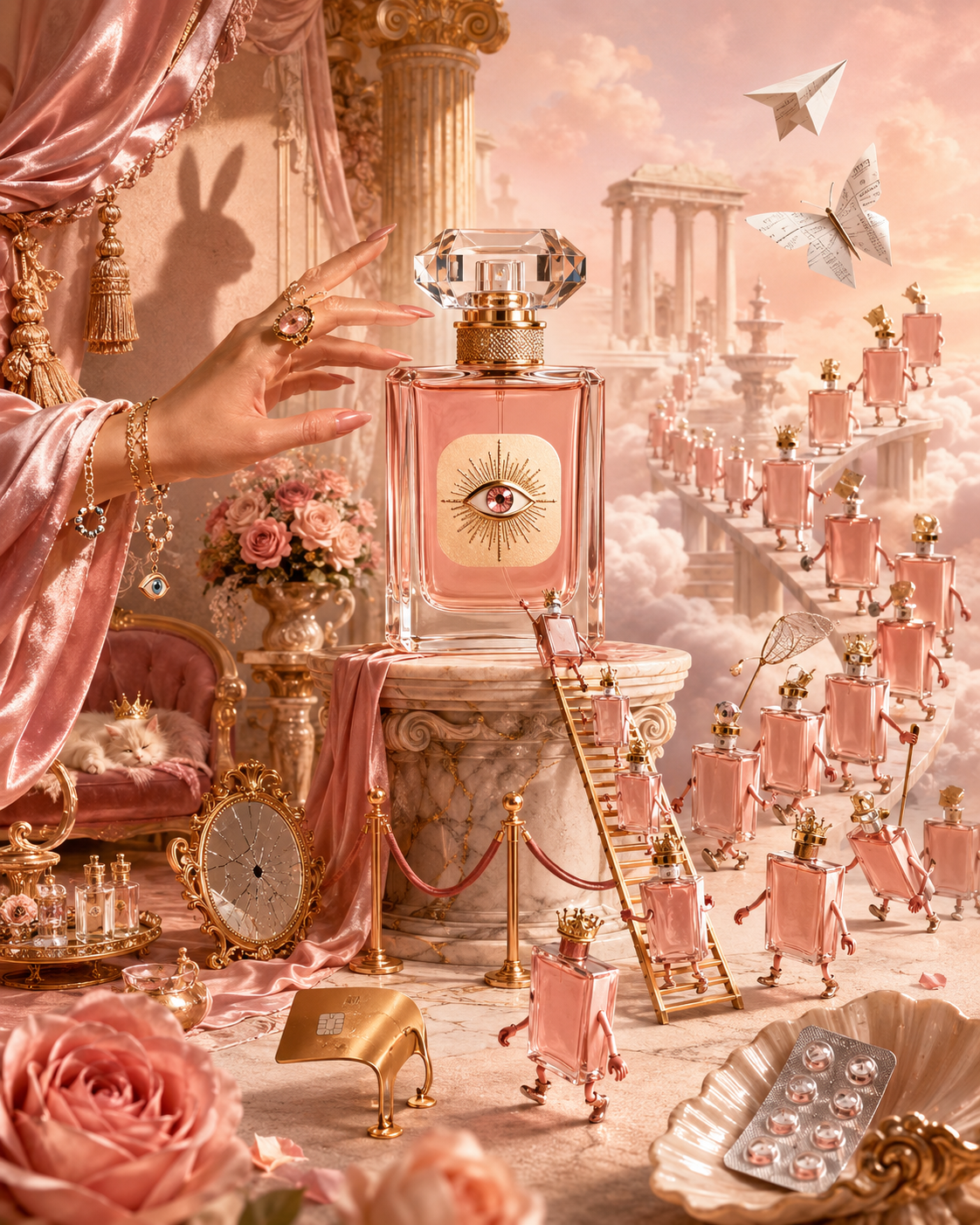
Luxury houses created this market themselves.
Perfume was once the open door into luxury. You might never afford the Chanel suit, Hermès handbag or Louis Vuitton luggage, but you could save for the scent. That bottle welcomed you into the fantasy.
Now the door costs half a month’s food shopping.
Then brands spend millions courting young consumers through TikTok, celebrities and influencers, and appear shocked when those same consumers choose Zara, Superdrug or an affordable Middle Eastern perfume instead.
They still want fragrance. They still want beauty, ritual, identity and compliments.
Perfume rejected their budget.
The price of the juice
I work with perfume houses and with people starting their own brands. I know the juice costs money. So do the bottles, the testing and the people who sell it. But when a brand sells a whole world around a fragrance, some of the price is for the world.
In Grasse I bought a perfume from Didier, who made it himself. Tuberose, orange blossom and jasmine, for €70 when I visited. I could smell the work in it. There’s no reason the person who made the cheaper bottle can’t be an artist too.
Smell it again in an hour
Social media loves a side-by-side comparison. The first spray is quick to film. How the perfume opens up on skin, what’s left after a few hours and whether you actually want to wear it again are slower questions. Two scents can start in almost the same place and end up miles apart.
Dupes deserve scrutiny. Counterfeits deserve condemnation. But affordable fragrance is not the death of perfumery.
It is the predictable side entrance people use when luxury bolts the front door—and then blames the crowd for leaving.