Melly’s Musings
The Robot in the Lidl Car Park
Can AI replace the perfumer?
By Melanie Jane
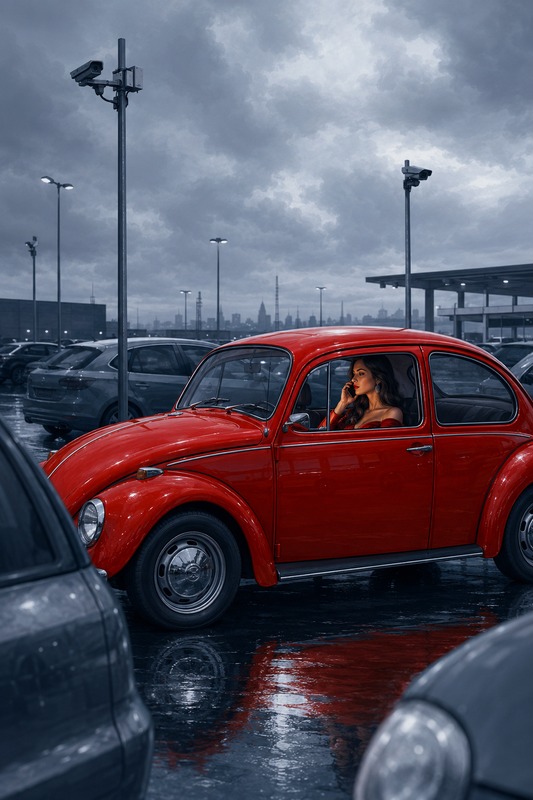
In 2021, in the middle of the pandemic, I found myself sitting in my car in the rain in a Lidl car park, talking to a fourth-generation perfumer from Grasse about artificial intelligence.
As you do.
AI had not yet become the answer to every question, the author of every terrible LinkedIn post or the thing your aunt used to turn herself into a suspiciously smooth Disney princess. Most people outside technology were barely discussing it.
Perfumers were.
He told me they were already asking what AI would mean for their profession. Would it change the way they worked? Would companies still need as many perfumers? Eventually, would perfumers be needed at all?
I asked him what he thought.
“Yes,” he said. “Because we can smell.”
That answer stayed with me.
Five years later, AI can analyse enormous formula libraries, identify patterns, predict how molecules may smell, process consumer responses and suggest combinations in seconds. It can turn words, colours and images into the beginnings of a fragrance idea. It can help a perfumer move faster than anyone sitting with a pencil, calculator and several thousand raw materials ever could.
But faster is not the same as better. Data is not taste. Prediction is not perception.
And a machine may recognise a pattern called jasmine.
It has never buried its face in the real thing.
The robot has entered the perfumery
AI in perfumery is not a chrome robot wearing a white coat and declaring, “More bergamot.”
It is software trained on data: fragrance formulas, raw materials, molecular structures, consumer preferences, performance information and the relationships between them.
Givaudan launched Carto in 2019. It helps perfumers explore materials and optimise olfactive performance, while a robot dispenses the formula so an idea can become a physical trial almost immediately. Symrise developed Philyra with IBM, using fragrance data to suggest new combinations and later incorporating sustainability criteria. IFF’s ScentChat uses AI to help fragrance teams make sense of real-time consumer feedback. Osmo can take a word or image as the starting point for a fragrance brief and uses machine learning to search for new odorous molecules.
That is not one job. It is several.
AI can help navigate thousands of possibilities, flag patterns a human might overlook, produce variations, compare performance targets and reduce some of the repetitive trial-and-error work.
This matters because commercial perfumery is not a perfumer wandering dreamily through a field of tuberose. There are briefs, budgets, deadlines, regulations, stability problems, consumer tests and clients asking for something “completely new” that smells reassuringly familiar.
AI can clear some of that undergrowth.
But it still needs somebody to decide where the hell the fragrance is going.
Can AI actually smell?
Not in the way you do.
AI has no nose, olfactory receptors or brain receiving signals from them. It does not inhale a molecule and experience an odour. What it can do is analyse information connected to smell.
A model can study molecular structures alongside human descriptions such as woody, minty, sulphurous or floral, then predict how an unfamiliar molecule may be described. In a 2023 study, researchers tested an odour map on 400 molecules that were new to the model and found it could often match a panel’s average description better than individual panellists did.
Electronic noses do something different. Sensors detect chemical patterns in the air, then software classifies them. They may recognise spoilage, smoke, disease markers or a known aroma profile. Useful? Absolutely. The same as smelling? Not quite.
The machine is working from measurements, labels and patterns supplied or validated by humans. It may predict that a molecule will smell rosy. It does not know whether that rose feels funereal, romantic, old-fashioned, metallic, filthy or like the hand cream in your grandmother’s handbag.
Human smell is tangled up with memory, culture, language, hormones, expectation and personal history. The same perfume can comfort one person and make another want to leave the room.
AI can model our collective descriptions with frightening cleverness.
But it does not have a childhood.
And smell, inconveniently, keeps opening doors to ours.
The nose still has a job
So, will AI replace the perfumer?
It may replace parts of the work. Pretending otherwise would be sentimental bollocks.
AI can search enormous databases, suggest formulas, generate modifications, predict preferences and help meet cost, performance or sustainability targets. A company may need fewer hours of routine adjustment. Some entry-level tasks may change. Clients may arrive with an AI-generated formula and believe the difficult bit has already been done.
It has not.
A fragrance is not successful because every box has been ticked. Somebody still has to smell the trial and notice that the opening is magnificent, the middle collapses and the dry-down resembles a damp cupboard. Somebody must interpret a vague brief, decide which beautiful accident deserves keeping and know when technical perfection has produced something emotionally dead.
Perfumers also bring taste: judgement developed through years of smelling materials, finished fragrances, failed trials and tiny modifications that alter the structure.
AI can propose ten thousand possibilities. The perfumer decides which one has a pulse.
The future is unlikely to be human versus machine. It will be experienced perfumers using powerful tools — and inexperienced people discovering that owning the tool does not magically give them a nose.
AI may become a creative partner.
But partnership is the important word.
The machine can calculate, compare and suggest.
The perfumer still has to smell the bloody thing.
Adapted from Scent in 60.