Melly’s Musings
Apparently, All the Great Perfumers Are Men
Fracas. Youth-Dew. Paris. Trésor. Eternity. Organza. J’adore. Infusion d’Iris. La Panthère. Women made them. You’d never know it from some of the lists on Instagram.
By Melanie Jane
This morning, I made the mistake of opening Instagram before I’d been adequately fortified.
There was another post about the world’s greatest perfumers.
Edmond Roudnitska. Jean Carles. Jean-Claude Ellena. Dominique Ropion. Francis Kurkdjian.
Man. Man. Man. Man. Man.
It was beginning to look less like a history of perfumery and more like a very fragrant queue for the gents.
To be clear, those men deserve their places. Roudnitska doesn’t become less brilliant because I’m irritated. Jean Carles will survive this article. This isn’t about evicting men from perfume history.
It’s about opening the bloody door and noticing who else has been standing there for the best part of a century.
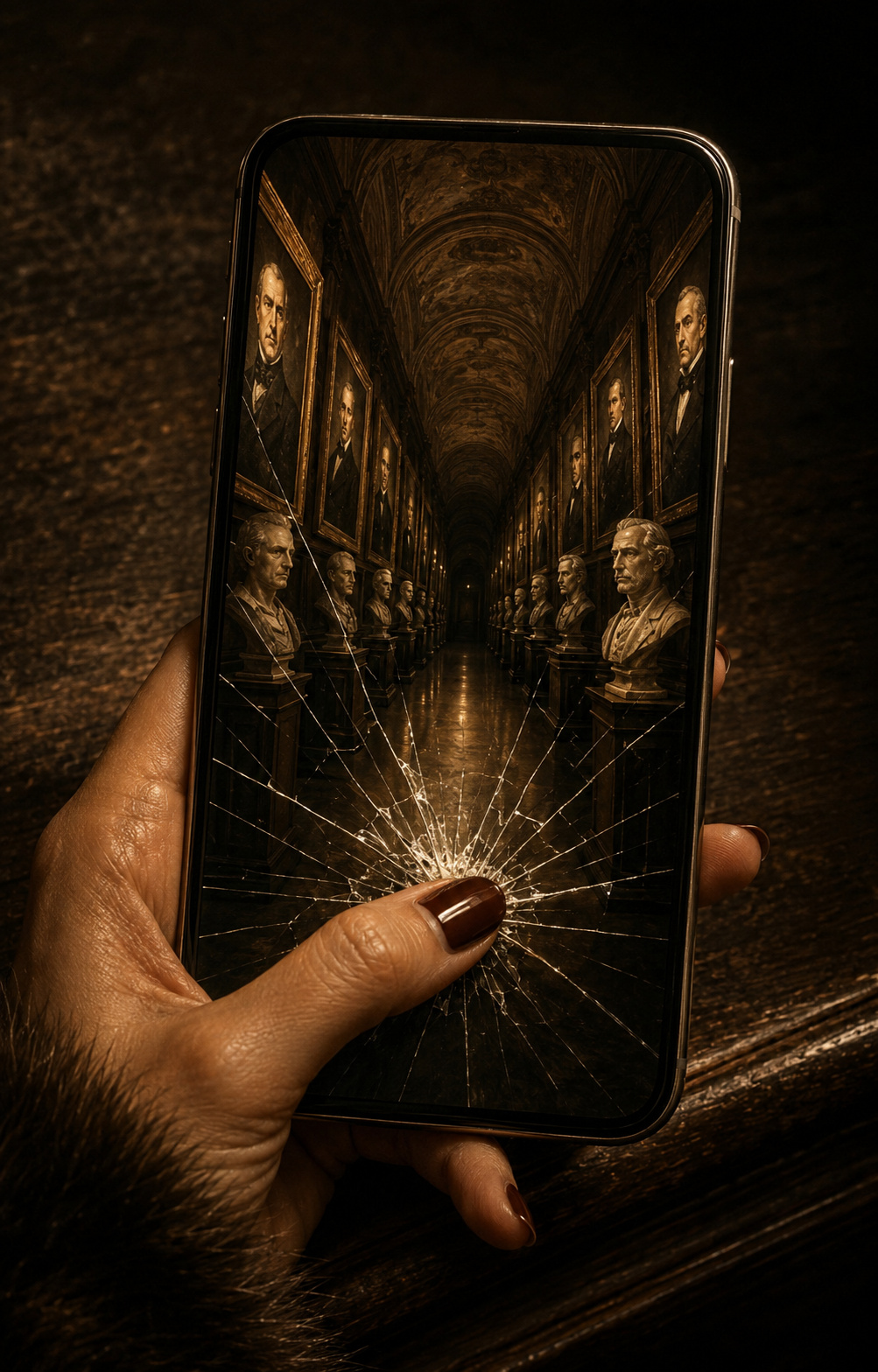
Because women didn’t recently arrive in perfumery wearing diversity lanyards. They created some of its landmarks while the industry carried on presenting the profession as an inheritance passed from one serious Frenchman to another.
The Osmothèque—the international perfume archive—puts it rather plainly: perfume creation was long considered a man’s job. Women were often involved behind the scenes, but the doors opened slowly and with difficulty.
The problem isn’t that women are absent from perfumery now. They’re everywhere. They’re master perfumers, principal perfumers, teachers and creative directors inside some of the biggest houses in the world.
The problem is that the popular pantheon hasn’t caught up.
Germaine Cellier: the woman who kicked the door
If we’re discussing perfumers who changed the direction of fragrance, Germaine Cellier isn’t an optional extra.
A trained chemist working in an industry almost entirely run by men, Cellier created Bandit for Robert Piguet in 1944, Vent Vert for Balmain in 1947 and Fracas for Piguet in 1948. Then came Jolie Madame for Balmain in 1953.
That’s not a respectable little CV.
That’s a rampage.
Cellier was known for bold structures and unapologetic overdoses. Vent Vert pushed galbanum until green stopped being a colour and became an event. Fracas made tuberose so voluptuous that, nearly eighty years later, it still enters a room before the woman wearing it. Bandit remains one of leather perfumery’s great reference points.
These weren’t important perfumes for a woman. They were important perfumes. Full stop.
Cellier was one of post-war perfumery’s pioneers. Her name should sit automatically beside the men from the same period.
And yet she’s routinely missing.
Joséphine Catapano: the olfactory genius inside the business genius
In America, Joséphine Catapano was doing something equally seismic.
She created Youth-Dew for Estée Lauder in 1953. Lauder’s commercial idea was brilliant: sell it first as a bath oil women could buy for themselves, rather than waiting for a man to present them with perfume on a birthday, anniversary or after doing something suspicious.
But the smell itself—the rich, spicy, ambery composition that helped build Estée Lauder’s fragrance business—was Catapano’s work.
Both women deserve the credit. Estée Lauder supplied the marketing genius. Joséphine Catapano supplied the olfactory one.
Catapano also created Norell, Fidji for Guy Laroche and Zen for Shiseido. Her obituary described her as the first American woman perfumer of note. She became an executive at IFF and mentored another woman who’d go on to make an absurd number of the perfumes we now call classics.
Sophia Grojsman: the woman behind half your perfume cabinet
Sophia Grojsman was born in what’s now Belarus, studied in Poland and joined IFF as a laboratory technician in 1966.
She remained there for nearly fifty years and created more than thirty bestselling fine fragrances.
Among them were White Linen, Paris, Beautiful, Calyx, Eternity, Trésor, Spellbound and Champagne, the fragrance later renamed Yvresse after the French wine producers objected to Yves Saint Laurent borrowing their bubbles.
If a man had produced that list, there’d be documentaries showing him staring moodily at a blotter in black and white.
Grojsman had an extraordinary ability to make perfumes that were emotional and hugely commercial without feeling like olfactory wallpaper.
There was nothing timid about her roses or apologetic about her femininity. She could make a fragrance feel enormous and intimate at the same time.
IFF called her a pioneer in understanding what women wanted and credited her with turning relatively simple scent ideas into global phenomena.
By 2001, IFF’s own annual report listed her as Corporate Vice President and Senior Perfumer—the most senior title shown among its New York perfumers.
Quite a climb from the laboratory bench.
In 2016, she received the Fragrance Foundation’s Lifetime Achievement Perfumer Award. IFF’s own list of her creations reads less like a portfolio and more like the contents of an entire fragrance hall.
She didn’t merely succeed in a male-dominated industry. She trained and influenced the people who came after her.
That’s how a lineage is built.
Sophie Labbé: Organza wasn’t made by Givenchy
Perfume houses don’t sit up late at night weighing jasmine absolute.
People do.
Organza may say Givenchy on the bottle, but the perfumer was Sophie Labbé.
Labbé studied chemistry, graduated top of her class at ISIPCA in 1987, spent five years at Givaudan and twenty-seven at IFF before joining dsm-firmenich as a principal perfumer in 2019.
For Organza, she drew inspiration from Colette’s description of gardenia: creamy, green and with that strange, almost mushroom-like shadow hiding beneath the immaculate white petals.
Labbé wanted the fragrance to contain many ages of womanhood at once—not a girl at one end and a matron at the other, but the whole bloody woman.
The result was a voluptuous gardenia, tuberose and vanilla perfume arriving in 1996, in the middle of an era busy washing everything in sheer musks and clean air.
Organza became my signature scent when I first moved to Dubai. Friends said it was simply me, and even now one breath takes them straight back there. Looking back, I think it was the first perfume that felt like the woman I was becoming.
Somewhere between Organza and Chanel No. 5, I stopped wearing it, although I still rescue every bottle I find at French flea markets, full or empty. Givenchy still sells it, so writing this has left me with one obvious question: why the hell am I not wearing it now?
Labbé has since created and co-created fragrances including Bvlgari Jasmin Noir, Parisienne, Calvin Klein Beauty and Salvatore Ferragamo Signorina.
Her official dsm-firmenich profile compares composing perfume to gardening. You need patience and skill, and you can’t rush the thing into blooming.
Organza didn’t simply appear from the benevolent mist surrounding Givenchy.
A woman made it.
Her name is Sophie Labbé.
Calice Becker: from J’adore to the next generation
Then there’s Calice Becker.
J’adore by Dior. Tommy Girl. Velvet Orchid for Tom Ford. Intoxicated for Kilian. Dylan Blue for Versace.
Tommy Girl and J’adore don’t sound as though they came from the same perfumer, which is precisely the point. Becker hasn’t spent her career leaving the same formula lying around in different hats.
She trained at Roure in Grasse in 1985 and went on to spend more than thirty-five years at Givaudan. By 2017, she was directing the Givaudan Perfumery School and helping to decide how the craft would be passed on.
In 2021, she received the Fragrance Foundation’s Lifetime Achievement Perfumer Award. Givaudan praised both the perfumes that marked their eras and her leadership in the art and science of perfumery.
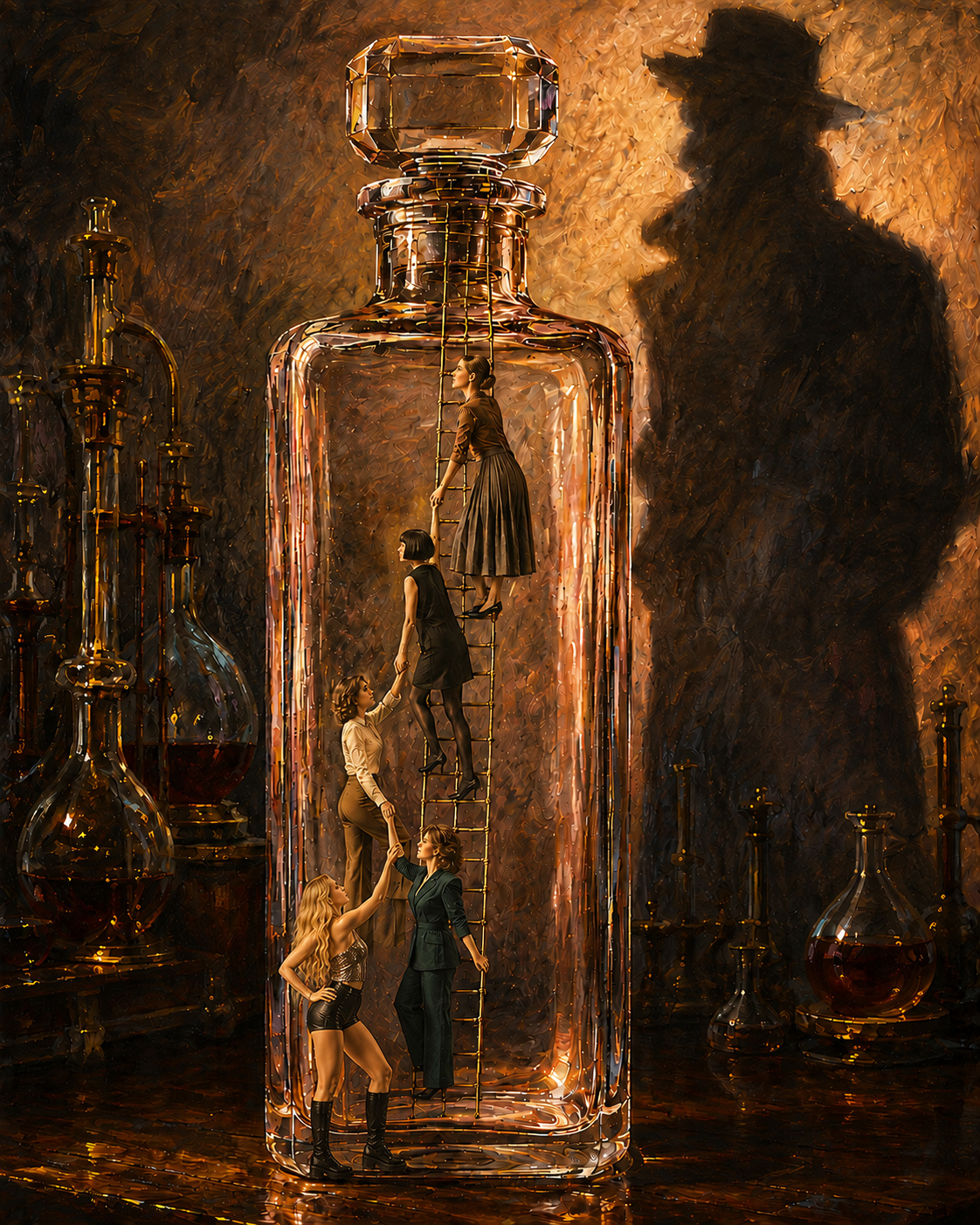
She didn’t just reach the top of the ladder. She’s teaching the next generation how to climb it.
Daniela Andrier: making Prada smell like Prada
Some perfumers create a hit for a brand. Daniela Andrier helped give Prada an olfactory language.
She studied philosophy before training at Roure, and you can almost smell that background in her work. She takes a familiar material and turns it half a degree, just enough to make it strange.
Infusion d’Iris didn’t scream for attention. It made restraint feel radical.
Prada Candy went in completely the opposite direction with caramel, powder and sensual excess, yet it still felt intelligent rather than edible in the usual sticky sense.
Across years of working with Miuccia Prada, Andrier made the fragrances smell like Prada looked: clever and immaculate, with something slightly odd happening under the surface.
In 2025, the Fragrance Foundation gave Andrier its Lifetime Achievement Perfumer Award after a forty-year career, calling Infusion d’Iris “wildly influential”. Her other work includes Maison Margiela Untitled, Tiffany Eau de Parfum, Calvin Klein Contradiction and Emporio Armani She.
Again, not an interesting female perfumer.
A great perfumer.
Anne Flipo: “A woman perfumer? No way.”
That’s what Anne Flipo was told at the beginning of her career.
She went ahead anyway.
Across more than thirty-five years, Flipo has created and co-created La Vie Est Belle, Libre, L’Interdit, Lady Million, Synthetic Jungle, La Chasse aux Papillons and Basil & Neroli for Jo Malone London.
That list moves from enormous global blockbusters to a Frédéric Malle perfume so green it feels as though somebody has slapped you with an entire polytunnel.
Flipo says she wants signature, impact and pleasure from a perfume. Her fragrances make their point. You know what they’re saying, although it isn’t always what you expected them to say.
Several of her biggest fragrances were collaborations with male perfumers whose names already appear regularly in the canon.
That doesn’t make her contribution smaller. She wasn’t the helpful woman standing beside the geniuses. Her name belongs in the credits at exactly the same size.
In 2023, Flipo received the Fragrance Foundation’s Lifetime Achievement Perfumer Award.
Apparently, “no way” found a way.
Mathilde Laurent: the keys to Cartier
Mathilde Laurent spent eleven years at Guerlain, working alongside Jean-Paul Guerlain, before moving to Cartier in 2005.
Today, she’s Cartier’s in-house perfumer and creative director of perfume.
Her work includes La Panthère, Baiser Volé and the extraordinary Les Heures de Parfum collection.
With La Panthère, she built a modern chypre around gardenia and musk. It’s recognisably Cartier, but it isn’t trapped inside the smell of inherited luxury.
One of Laurent’s great strengths is that she treats perfume as an artistic language, not a scented accessory wheeled in after the jewellery campaign has been approved. Cartier explicitly gives its in-house perfumer authorship; the company’s own pages identify La Panthère as Laurent’s creation.
This shouldn’t be remarkable.
Somehow, it still is.
Christine Nagel and Delphine Jelk: inside the grand old houses
The upper floors of the heritage houses are no longer occupied exclusively by men with dynastic surnames.
Christine Nagel is the creative director of Hermès perfumes. Her work for the house includes Galop d’Hermès, Twilly d’Hermès, H24, Terre d’Hermès Eau Givrée and Un Jardin à Cythère.
She didn’t arrive to preserve Jean-Claude Ellena’s handwriting in aspic. She brought her own, with a habit of making unlikely materials rub against one another.
At Guerlain, the company now states officially that Thierry Wasser and Delphine Jelk “share the reins” of perfume creation.
Jelk joined the house in 2014 and has worked across Aqua Allegoria and L’Art & La Matière. She’s found room for her own fondness for iris, musk, vanilla, almond and milky textures inside that enormous Guerlain inheritance.
Her Tobacco Honey won the Fragrance Foundation’s 2024 Perfume Extraordinaire award.
So the women aren’t waiting politely outside the maisons anymore.
They’re inside, holding the formulas.
The industry has moved. The story is lagging behind.
This is where the argument needs to be fair.
Perfumery isn’t the same profession it was in Germaine Cellier’s day.
Women are now widely represented, and the industry has begun to honour them properly.
Since 2015, the Fragrance Foundation’s Lifetime Achievement Perfumer recipients have included Annie Buzantian, Sophia Grojsman, Calice Becker, Anne Flipo, Daniela Andrier and, in 2026, Honorine Blanc.
That’s not tokenism.
That’s a body of work.
But it didn’t happen without resistance.
Anne Flipo has recalled being told at the start of her career, “A woman perfumer: no way.”
Honorine Blanc—born in Beirut, trained in Paris and later established in New York—once thought the profession was impossible because she was a woman, wasn’t French and didn’t come from Grasse.
In June 2026, she received the industry’s Lifetime Achievement Perfumer Award.
The doors opened.
The women walked through them.
They made the perfumes, won the awards, trained the students and took creative control inside historic houses.
And still, somebody opens Instagram and posts another history of the world’s greatest perfumers in which every single person is a man.
Where were the women?
In the lab.
Making Fracas, Youth-Dew, Paris, Trésor, Eternity, Organza, J’adore, Infusion d’Iris and La Panthère.
The disappearance happened afterwards.
Sources and further reading
- Osmothèque: Femmes parfumeurs, portraits
- The Fragrance Foundation: honorees archive
- IFF: Sophia Grojsman Lifetime Achievement Award and selected creations
- Givaudan: Calice Becker Lifetime Achievement Award
- dsm-firmenich: Sophie Labbé
- The Fragrance Foundation: Daniela Andrier
- The Fragrance Foundation: Anne Flipo
- The Fragrance Foundation: Honorine Blanc
- Guerlain: its current perfume creators